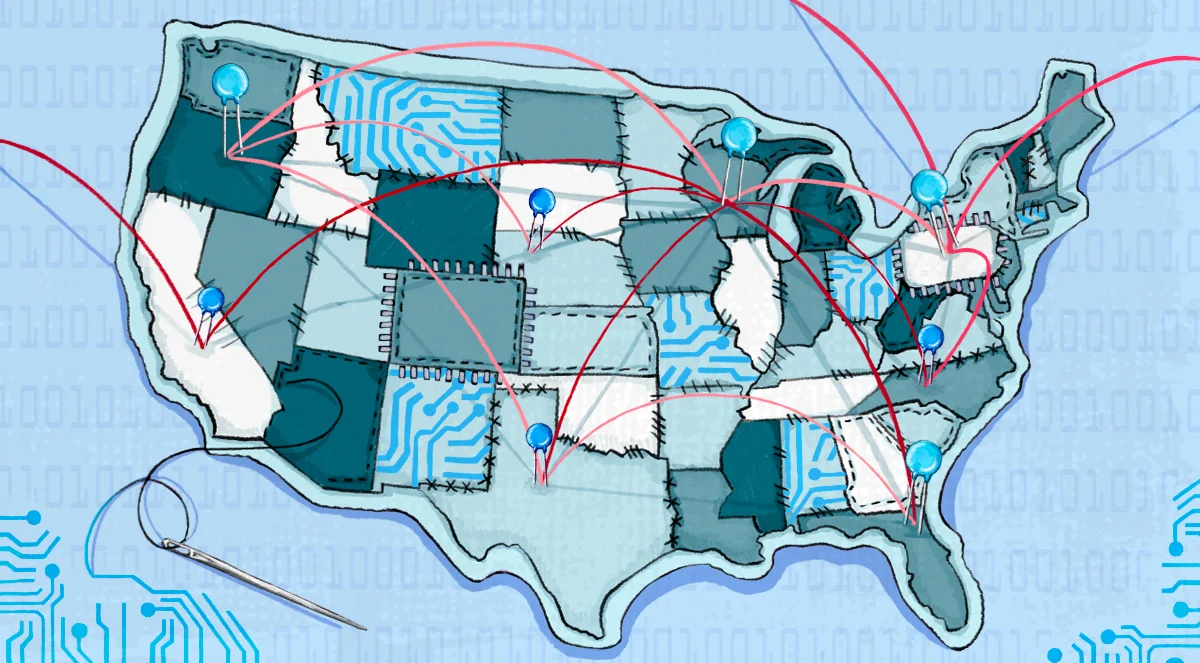
The fabric builds on decades of experience; it carries the data of national collaborations across physics, astronomy, and the Earth sciences. From gravitational waves to the water cycle, these are the projects that depend on it every day.
A selection of the collaborations connecting their repositories and workloads to the fabric.
Data from the LIGO, Virgo, and KAGRA interferometers moves over the fabric to help detect black-hole and neutron-star collisions — a cornerstone of NSF multi-messenger astronomy.
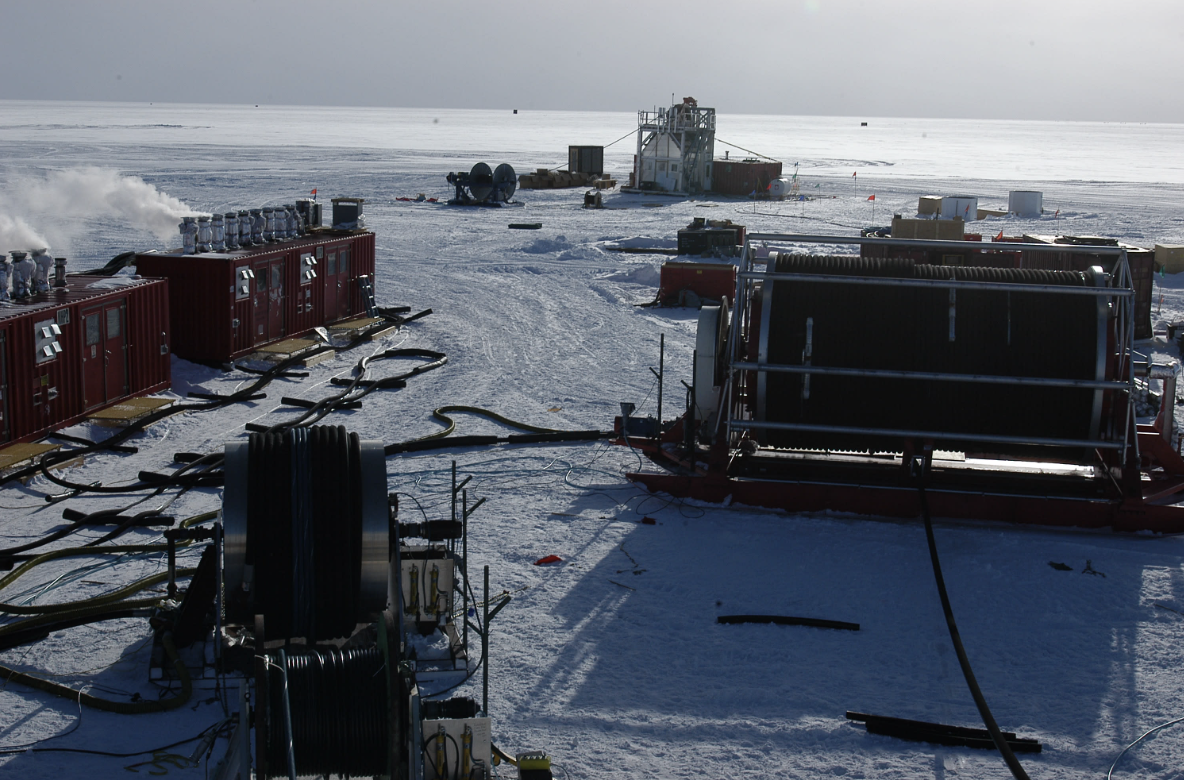
A cubic kilometer of Antarctic ice with over 5,000 optical sensors near the South Pole, catching cosmic neutrinos from black holes, supernovae, and gamma-ray bursts.
Atmospheric and Earth-system datasets — weather models, reanalysis, and observations — delivered to educators and researchers nationwide through the OSDF.
Processing observations from the Very Large Array to build some of the deepest all-sky radio images ever made — at up to 300× the throughput on shared national capacity.
The Deep Underground Neutrino Experiment delivers common inputs for large-scale simulation jobs across the US over the OSDF, probing why the universe is made of matter.
Simulating the detector for the next-generation collider being built at Brookhaven, with input datasets served to collaborators through the fabric.
Active-acoustic data mapping fish schools and mid-water marine life — archived at NCEI and delivered through the fabric for abundance and habitat studies.
A 4+ PB simulation of global ocean circulation, converted and served over the fabric to make petascale climate data explorable — feeding the 2026 IEEE SciVis contest.
The projects on the fabric join hundreds of organizations across academia, government, and industry that have run high-throughput workloads on HTCondor for decades. HTCondor keeps a growing showcase of that science — from the Large Hadron Collider and the Event Horizon Telescope to campus labs analyzing everything from judicial records to dairy-cow health.